Healthy, strong grass starts at the roots, hidden beneath the soil, but the foundation of that carpet of green above. If the roots are in distress, the grass from the roots to the blades will become weak and unable to absorb the nutrients needed to survive. If you’re concerned for your lawn’s health, it may be time to consider extra help through the aeration and overseeding process!
What Is Aeration And Overseeding?
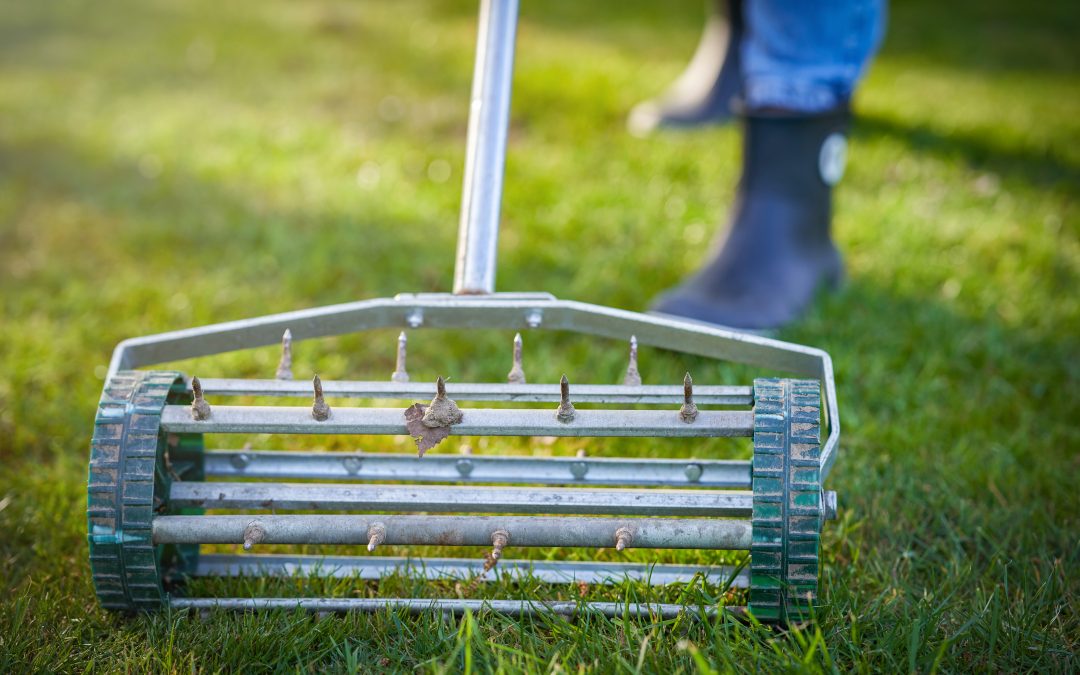
Aeration and overseeding is are lawn care processes that re-expose roots to air, water, and other nutrients. You can utilize spike or core aeration to achieve the reduction of soil compaction; both work well in getting the job done! The spike aerators poke small holes into the soil to break it up, while core aerators remove whole plugs of soil from the ground.
How To Aerate And Overseed Your Lawn
Aerating your lawn prevents soil compaction and thatch build-up (organic material like dead grass and roots along the soil surface) from negatively impacting your lawn. It’s a simple concept, but it should still be done properly to avoid accidentally damaging your lawn.
Research The Lawn Type You Have
Not every grass type is created equal, and if you buy grass seed, you need to know what to buy. You don’t want to aerate during dormancy periods, but instead during peak growing season. Also, determine what grass you have and when the best time to aerate and overseed for your climate is to maximize your chances of success!
Mow And Water Your Lawn
Before you aerate and overseed your lawn, you must ensure all the prep work is done to set you up for success! Mow your lawn so it’s not unruly, water the grass thoroughly the day before so the soil is easier to aerate, and mark where sprinkler heads are to avoid damaging them.
Perform The Aeration
As a general rule, you should puncture the holes or “plugs” into the ground every three inches, moving back and forth in a pattern similar to mowing. The entire space needs to be covered; however, it’s essential not to overdo it, to avoid weakening the root system or damaging the grass itself.
Overseed, Fertilize, and Water Again
The next step is to overseed your whole lawn; you’ll need to make sure to have extra seeds, as not all of them will take, and evenly spray an adequate amount so they’ll land inside the holes you just created. You can fertilize your lawn immediately afterward, to promote stronger growth, then follow up the seeding with watering every few days to keep the soil moist!
Understanding The Risks
Of course, there aren’t many landscape jobs that don’t involve some risk; if you attempt a DIY approach, you could do more harm than good. For starters, you could damage sprinklers, pipes, cables, or the grass itself if you don’t aerate in the correct way. You also risk physical harm if you lose control of your aerator or don’t know how to care for the equipment.
Additionally, if you aerate and overseed in the wrong conditions, you could disrupt your lawn’s growth and cause severe root damage! Improper overseeding may leave areas of your lawn with too much or too little, resulting in disproportionate growth. All these mistakes (and more) are completely preventable, as long as the correct tools are used and someone with lawn care knowledge is leading the way!
Getting The Job Done
We don’t want to see our neighbors hurt themselves or their lawns when all they want is to take care of it. That’s why you should always do research before jumping into a new landscaping project and consult with a professional about your options. CityWide is the team you need to be successful in your lawn care endeavors including your aeration and overseeding needs.
Let’s create a healthy lawn and a happy environment for you!